Disclosure: This article contains affiliate links. If you purchase through them, I may earn a small commission at no extra cost to you. I only recommend products I’ve researched thoroughly and genuinely believe in.
Most fitness trackers make a deal with you: wear this screen on your wrist, let it buzz at you all day, and in return you’ll get your health data. It’s a fair trade — until you realize you’ve been anxiously glancing at your wrist 50 times a day and getting worse sleep because of it.
Google just rethought that deal entirely. The Fitbit Air, launched in May 2026, strips away the screen completely. No notifications. No glanceable display. Just a small, curved pebble that sits on your wrist and quietly gathers the most comprehensive health data Fitbit has ever offered — then delivers it all inside the Google Health app when you decide to check in.
It sounds counterintuitive. But after spending time with this device, I think it’s actually the smarter approach. Here’s everything you need to know.

What Is the Fitbit Air, Exactly?
Think of it as the opposite of a smartwatch. Where a smartwatch adds to your wrist — bigger screen, more features, more distractions — the Fitbit Air subtracts everything until only the essentials remain: a tiny sensor cluster, a comfortable band, and a week of battery life.
Fitbit calls the core unit a “pebble.” It’s their smallest tracker ever, and the screenless design is deliberate — not a cost-cutting measure, but a philosophical one. The idea is that you should live your life, and then check your data, rather than letting the data interrupt your life.
“You have the freedom to explore deep insights when you want them, and stay notification-free when you don’t.”

The Specs: Small Package, Serious Sensors
Don’t let the minimalist form factor fool you. Under that quiet exterior, the Fitbit Air packs sensors that most dedicated health trackers would envy.
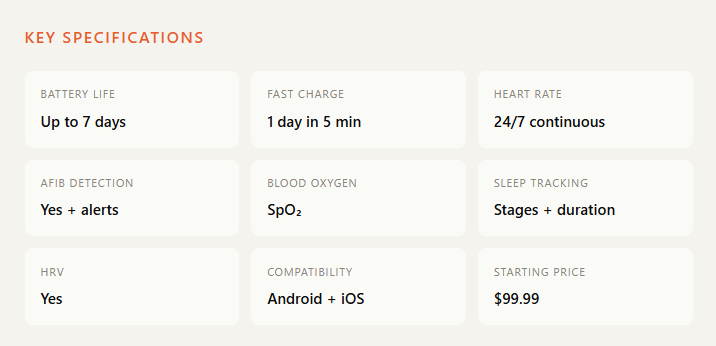
Heart rate variability (HRV) alone — a measure of the variation in time between heartbeats — is increasingly used by elite athletes and longevity researchers as one of the most reliable indicators of recovery, stress, and cardiovascular health. The fact that a $99 device tracks it continuously is remarkable.
The AFib monitoring is particularly worth calling out. Atrial fibrillation often goes undetected for years because episodes can be brief and irregular — exactly the kind of thing a continuous wrist sensor can catch that a periodic doctor visit might miss.
Sleep Tracking That Actually Works
This is where the screenless design pays its biggest dividend. Sleep tracking is only useful if you actually wear your device to bed — and most people don’t, because their smartwatch is too bulky, too hard, or because they’re already spending too much mental energy checking it during the day.
The Fitbit Air is thin and curved enough that most people report forgetting they’re wearing it. That means you actually get the sleep data, consistently, night after night. And consistent data is far more valuable than perfect data you only collect once a week.
Google’s Health Coach (available with the Premium subscription) then uses that sleep data alongside your activity and heart rate patterns to give you genuinely personalized guidance — not generic tips, but recommendations calibrated to your body’s patterns over time.
Workout Tracking Without the Friction
You can start a workout from the Google Health app, follow along with a coach-recommended session, or simply start moving — the Fitbit Air will detect common activities automatically and send you a recap when you’re done.
That auto-detection improves over time, too. It’s personalized to your movement patterns, which means after a few weeks it gets remarkably accurate at identifying not just “this person is exercising” but “this is their specific workout style.”
One feature I find genuinely clever: with Google Health Premium, you can photograph the cardio equipment at your gym — or even the whiteboard showing the day’s circuit — and the app will log it. That kind of frictionless input is what makes the difference between a fitness app you actually use and one you abandon in February.
The Fitbit Air also plays well with others in the Google hardware ecosystem. You can wear your Pixel Watch during the day and switch to the Fitbit Air at night for sleep tracking — without losing any data continuity.
Three Band Styles: Built for Every Moment
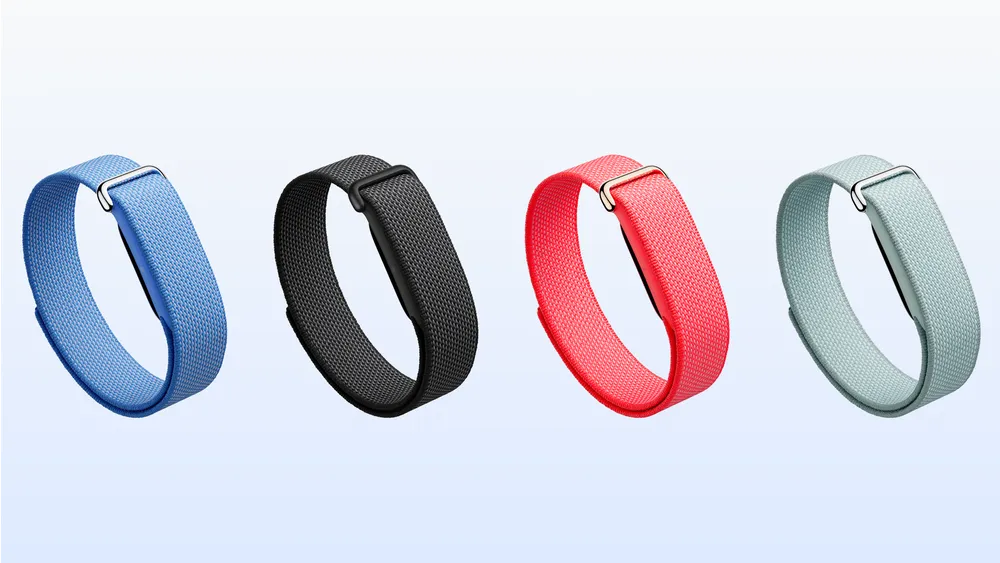
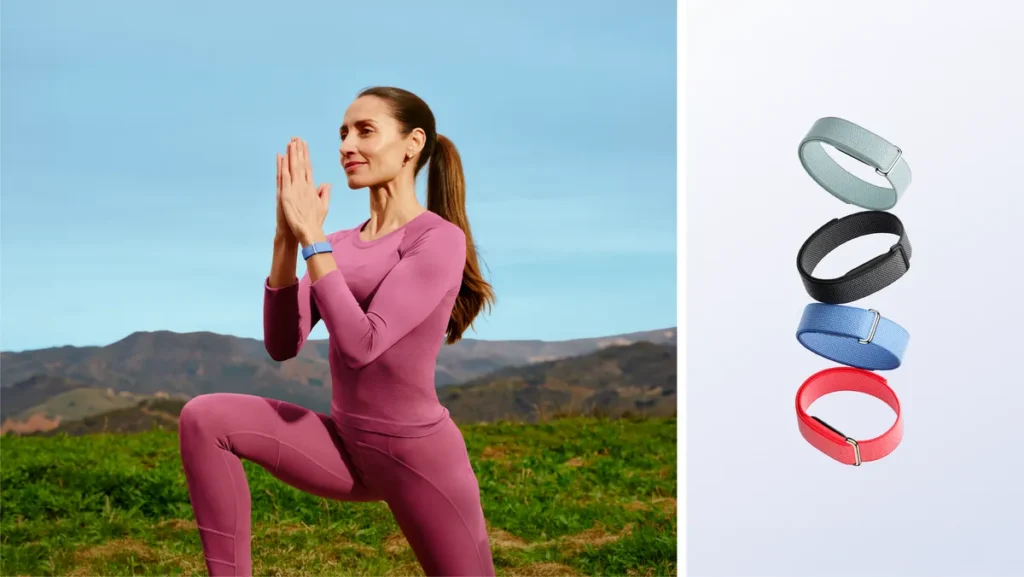
The clever part about the Fitbit Air’s band system is that the sensor pebble pops out and snaps into different bands in seconds — no tools required. So the same device goes from workout to boardroom to date night with a quick swap.
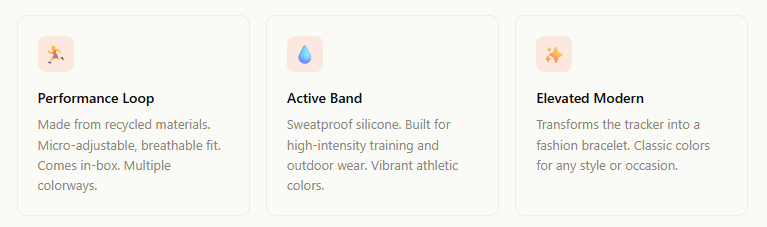
Transforms the tracker into a fashion bracelet. Classic colors for any style or occasion.
Accessory bands start at $34.99 and are worth picking up at launch — especially if you’re planning to wear this device across different contexts, which is exactly what it was designed for.

The Stephen Curry Special Edition

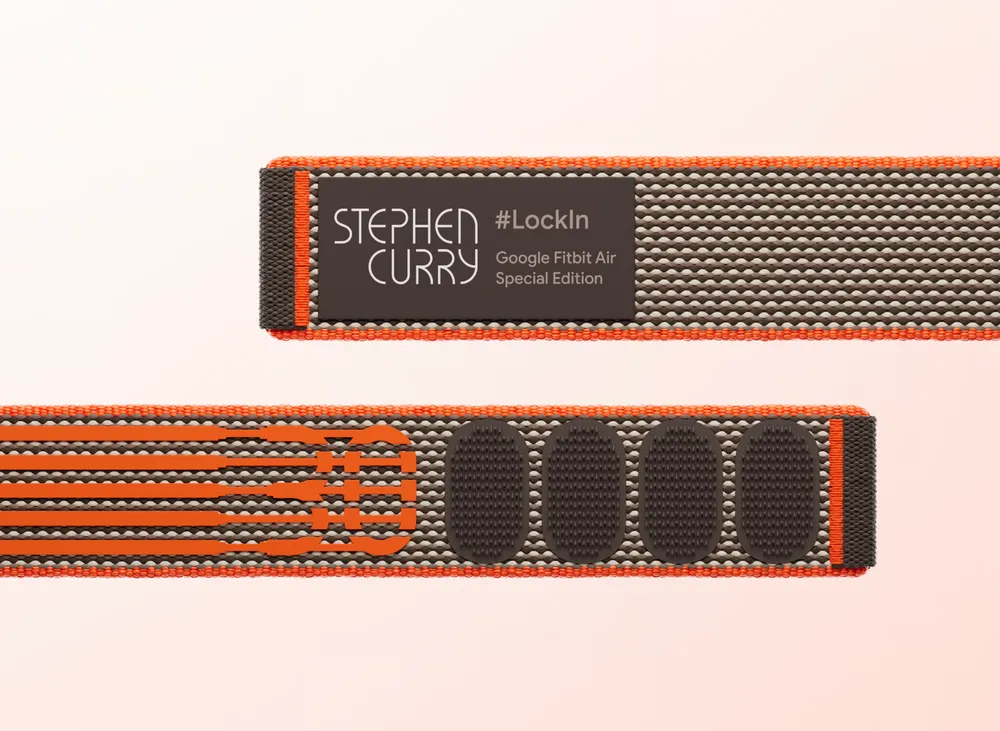
For those who want something a little more distinctive, Google co-designed a Special Edition with NBA star Stephen Curry. It comes in an elegant rye brown with a pop of game-day orange — stunning both on and off the court.
Beyond the aesthetics, the band has a unique water-resistant coating and a raised interior print inspired by athletic racing stripes, specifically engineered to increase airflow during intense movement. It’s one of those details that makes a product feel genuinely considered rather than just marketed.
At $129.99, the Stephen Curry Special Edition hits shelves today — and given Curry’s fanbase, inventory is likely to move fast.
The Subscription Question: Is Google Health Premium Worth It?
Every Fitbit Air comes with a three-month free trial of Google Health Premium — after that, it’s $9.99/month. That’s the honest part of the conversation we need to have.
Without Premium, you still get solid basic tracking: steps, heart rate, sleep duration, workout detection. With it, you unlock the Google Health Coach — personalized daily readiness scores, AI-powered guidance, detailed sleep analysis, and the workout photo-recognition feature mentioned earlier.
My take: the first three months will tell you whether Premium is worth it for your lifestyle. If you find yourself actually reading the Coach’s recommendations and adjusting your behavior, it’s worth every penny. If you’re mostly just checking step counts, the free tier is fine.
One note worth flagging for existing Google subscribers: if you already have a Google AI Pro or Ultra plan, Google Health Premium is included at no extra charge. Check your subscription before paying for it twice.
The Bottom Line
The Fitbit Air is not a smartwatch. It doesn’t try to be. And that restraint is exactly what makes it interesting.
In a market where every wearable is competing to do more — bigger screen, more apps, more notifications — Fitbit went the other direction. They asked: what if the most powerful health tracker is the one you actually wear, every day, including to bed, without thinking about it?
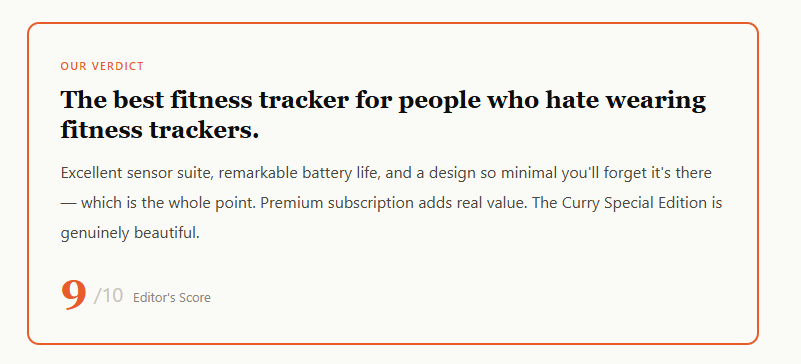
At $99.99 with a three-month Premium trial, it’s also the most accessible entry point into serious health tracking we’ve seen. The sensor suite rivals devices that cost three times as much. The battery life is exceptional. The bands are genuinely stylish.
If you’ve ever bought a fitness tracker and stopped wearing it within a month, the Fitbit Air is worth a second look. The problem might not have been your motivation — it might have been the device.

Ready to upgrade your health tracking?
The Fitbit Air is available now. Pick it up before the Stephen Curry edition sells out.
Buy at Google StoreCheck on Amazon